
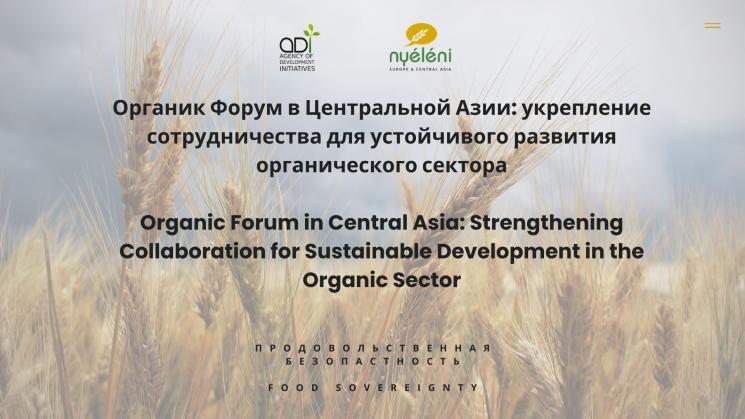
The Nyéléni ECA Food Sovereignty movement has launched its much-anticipated series of online thematic webinars. These monthly sessions aim to bring together member organizations and civil society actors to engage in meaningful dialogue, share insights, and learn from one another's experiences on the most pressing issues related to food sovereignty. The second webinar, hosted by ADI Kyrgyzstan, spotlighted the future of organic agriculture in Central Asia. Building on the outcomes of the first Central Asian Organic Forum, the session brought together regional experts and advocates to explore opportunities for collaboration, certification, innovation, and education—laying the groundwork for a stronger, more unified organic movement across the region.
The online webinar hosted on November 21, 2024, by ADI Kyrgyzstan, was more than just a discussion; it was a illustration of how collaboration and shared vision can reshape the future of organic agriculture in Central Asia. The session built on the foundations laid by the first Central Asian Organic Forum and delved into the possibilities of creating a unified platform to strengthen the organic sector in the region.
What stood out in this webinar wasn’t just the exchange of ideas, but the palpable sense of commitment and enthusiasm among the participants. Experts, practitioners, and visionaries from Central Asia came together to share their experiences, aspirations, and challenges in advancing organic agriculture.
The Power of Regional Unity – Sanjar Sultankulov, OrganiCA World Ambassador
Sanjar Sultankulov’s presentation was a passionate call for unity. He traced the origins of the organic movement in Central Asia, emphasizing the need for a Central Asian Organic Alliance. His vision revolves around creating a cohesive platform that promotes the region’s organic products while addressing global challenges.
His focus on sustainability, not just in agriculture but in human potential. Sanjar spoke of building the capacity of organic leaders across the region and integrating advanced technologies into organic practices. A particularly inspiring point was his emphasis on popularizing organic products within Central Asian markets, making them a source of pride and a staple of daily life.
Building Bridges with Certification – Dr. Arif Khaja, Sultanate of Oman
Dr. Khaja offered a perspective that was both practical and forward-looking. He highlighted the importance of reliable testing, inspection, and certification (TIC) in opening international markets for Central Asia’s organic products.
His examples were compelling. For instance, he detailed how certification not only ensures quality but also builds trust with global consumers. Dr. Khaja’s proposal to collaborate with Central Asian stakeholders for organic certification could be a game-changer for the region, especially for smallholder farmers seeking to expand their market reach.
An Academy for Organic Excellence – Tahmina Saifullaeva, Tajikistan
Tahmina Saifullaeva’s vision for the Central Asian Organic Academy was one of the most ambitious ideas presented during the webinar. The academy isn’t just about education; it’s about empowerment. Tahmina shared a heartfelt revelation during the webinar, admitting that the idea of creating the Central Asian Organic Academy was born while preparing for the Central Asian Organic Forum. She explained how the forum's collaborative atmosphere and discussions about the region's potential in organic agriculture inspired her to envision an academy that could address key challenges and foster growth in the sector.
"The Forum was a turning point," Tahmina said. "It made me realize the immense need for a structured platform to enhance skills, share knowledge, and empower stakeholders in organic agriculture. That's when the concept of the academy began to take shape."
The academy’s structure is comprehensive:
- Auditors’ School: Developing professionals who can conduct rigorous organic certification audits.
- Consultants’ School: Equipping advisors with the tools to promote organic farming effectively.
- Farmers’ School: Providing practical knowledge tailored to producers’ needs.
- Women’s Organic Agriculture Academy: A particularly inspiring initiative focused on empowering women-led farms and households, fostering both gender equity and sustainable practices.
Innovation at Farmers’ Fingertips – Murod Khusanov, Uzbekistan
If you are someone who believes in the power of technology, you will be particularly impressed by Murod Khusanov’s initiativeor the opposite. The Pocket Agronomist – “Growth” project. This tool, designed as an AI-powered assistant for farmers, promises to provide real-time solutions to everyday challenges.
Murod shared examples of how the tool could help smallholders diagnose crop issues, optimize irrigation, and plan sustainable practices—all from the convenience of a mobile device. His emphasis on accessibility and scalability was refreshing, highlighting how technology can bridge gaps in knowledge and resources.
Paving the Way for Certification – Tungalag Lkhundevjamts, Mongolia
Tungalag Lkhundevjamts brought the discussion back to fundamentals with her focus on IFOAM certification standards. She unveiled a detailed training program for organic auditors, designed to prepare specialists capable of conducting thorough, independent evaluations.
What resonated with me was her pragmatic approach. The program includes 58 hours of theory and practice, with participants walking away with a globally recognized certificate. Tungalag’s vision for this initiative is clear: to create a pool of highly qualified auditors who can ensure that Central Asian organic products meet the highest international standards.
A Glimpse into the Future
The webinar left with a profound sense of optimism. It’s clear that Central Asia has the potential to become a leader in organic agriculture, but the road ahead requires collaboration, innovation, and persistence. The discussions during the webinar underscored the importance of shared platforms, where ideas can be exchanged, challenges addressed, and solutions found together.
As someone observing these passionate conversations, we can see a region that’s not just embracing organic agriculture but reimagining it. The energy, expertise, and shared determination of the participants make me hopeful for the future of the Central Asian organic movement.
This webinar was more than just an event, it was a step toward a sustainable and collaborative organic future. Let’s keep the momentum going!
The webinar recording is now available on our YouTube: https://youtube.com/@nyelenieca?feature=shared